Poland's Constitutional Crisis: Why the Nordic Countries Should Pay Attention
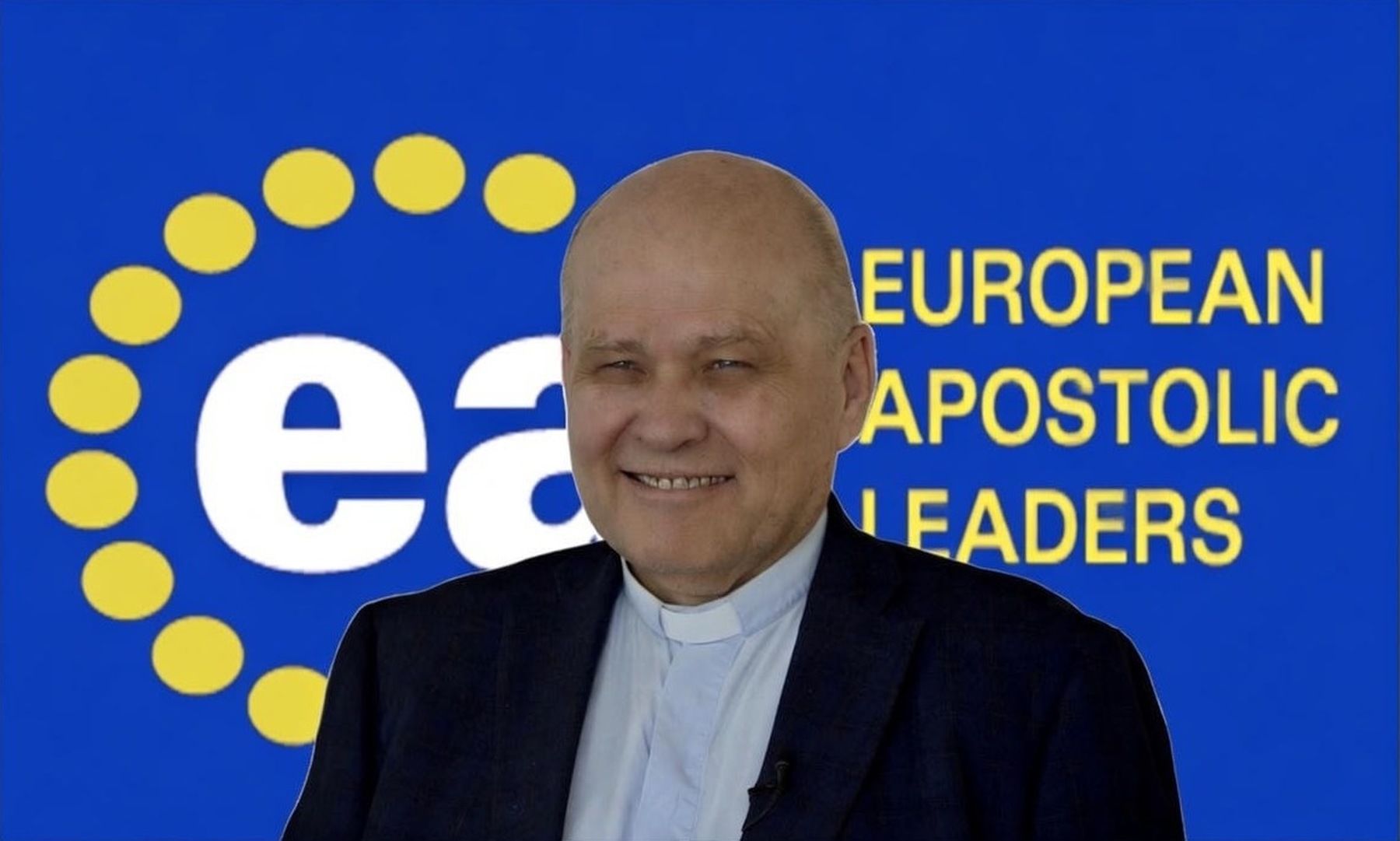
 Jerzy Kwaśniewski (Photo: Elekes Andor, Wikimedia Commons, CC BY 4.0)
Poland's Constitutional Tribunal sits behind police lines, its rulings go unpublished, and ordinary Poles are paying the price. With more than 280,000 people born in Poland living across the Nordic countries, this is not a distant quarrel.
On 30 October, Judge Anna Korwin-Piotrowska, one of the judges elected by Prime Minister Donald Tusk's parliamentary majority, declared the President of Poland's Constitutional Tribunal, Bogdan Święczkowski, and his deputy, Bartłomiej Sochański, suspended for a month and took charge of the court herself. The Prime Minister defended the move. Riot police were sent to the Tribunal, and they are still guarding the building. The Justice Minister has asked for Święczkowski's immunity to be lifted, and a Tribunal assembly is due to handle that on 17 November.
On 10 November, Poland's Supreme Court overturned both suspension orders. Judge Korwin-Piotrowska replied that the ruling has no effect, and the Justice Minister mocked it on X. Whatever one thinks of how the Tribunal was filled under the previous government, this is not how a state governed by law settles disputes. Even the International Commission of Jurists, which also faulted President Karol Nawrocki, says removing the court's leaders with police help breaks international standards.
Behind the headlines lies a quieter scandal. Since March 2024 the government has refused to publish the Tribunal's judgments in the official journal. The Tribunal now counts 85 unpublished rulings, and they are not abstract. One, from June 2024, should raise the pensions of roughly 200,000 retirees. Others concern tax refunds for home sellers and the rights of family carers. Ordinary Poles are paying for a political fight.The same silence is used on the most fundamental questions. On 28 July the Tribunal ruled unanimously, in case U 2/26, that a government regulation opening the way to register same-sex marriages contracted abroad as marriages in Poland violates Article 18 of the Constitution, which defines marriage as a union of a man and a woman. The government's equality commissioner, Katarzyna Kotula, answered that the ruling "has no legal force". A constitution is being set aside not by argument, but by refusing to print the court's decisions.
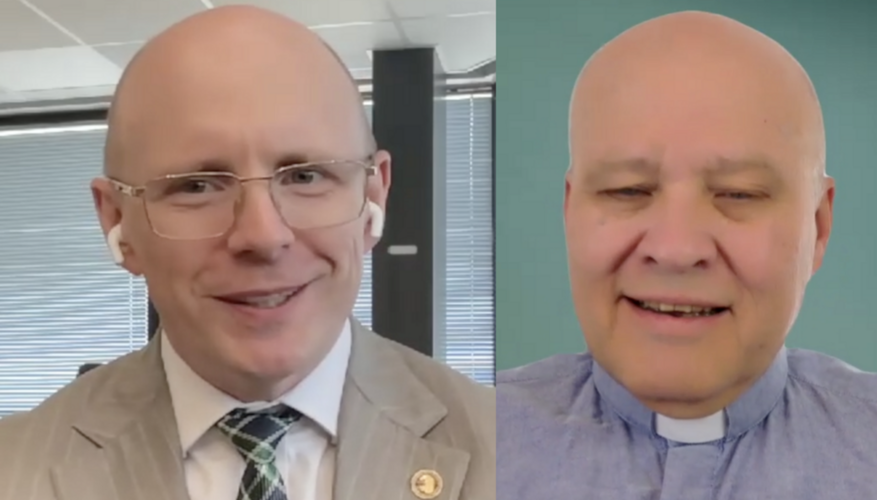 Jerzy Kwaśniewski and Jan-Aage Torp on Insight (photo: Oslo TV)
My friend Jerzy Kwaśniewski, President of the Ordo Iuris Legal Institute in Warsaw, has followed this crisis from the very first night. We have worked together for years. He has been my guest twice this year on Insight with Pastor Torp, and just days after the Tribunal was taken over he was with us in Oslo, at the Capitol Ministries meetings at the Grand Hotel on 3 November, telling political leaders from Washington, Europe and Norway what is happening in his country. Ordo Iuris lawyers are defending detained protesters free of charge and publishing their analysis in English. Jerzy calls what happened a coup d'état. I know him as a lawyer of high standards and a man of faith, and I urge everyone to read his analysis.
Why should this matter to us in the Nordic countries? According to the national statistics offices, about 112,000 people born in Poland live in Norway, where they are the largest immigrant group, and close to 100,000 in Sweden. Denmark has about 48,000 immigrants from Poland and Finland about 5,600. In Iceland, some 23,000 people born in Poland make up nearly six percent of the whole population, by far the largest immigrant group. Together that is more than 280,000 people. Their pensions, their families and their freedom of faith are shaped by what happens in Warsaw. Our Nordic nations, which rightly speak up for the rule of law around the world, should hold a close European partner to the same standard.
The pattern is clear: judges suspended, a Supreme Court ruling brushed aside, judgments left unpublished, and administrative silence overriding the text of the Constitution. I ask you to pray for Poland, for its leaders and for a peaceful, lawful way out. Our Polish neighbours across the Nordic region deserve to know, and they deserve our support.
A Norwegian version of this article was first published by Norge IDAG on 12 November 2026: https://idag.no/polens-grunnlovskrise-angar-ogsa-norden/19.54196
Read Ordo Iuris: https://ordoiuris.pl/en/comments/coup-detat-in-poland-after-the-constitutional-tribunal-they-will-come-for-the-supreme-court/.
