The UN Needs a Secretary-General Who Believes in the UN Charter
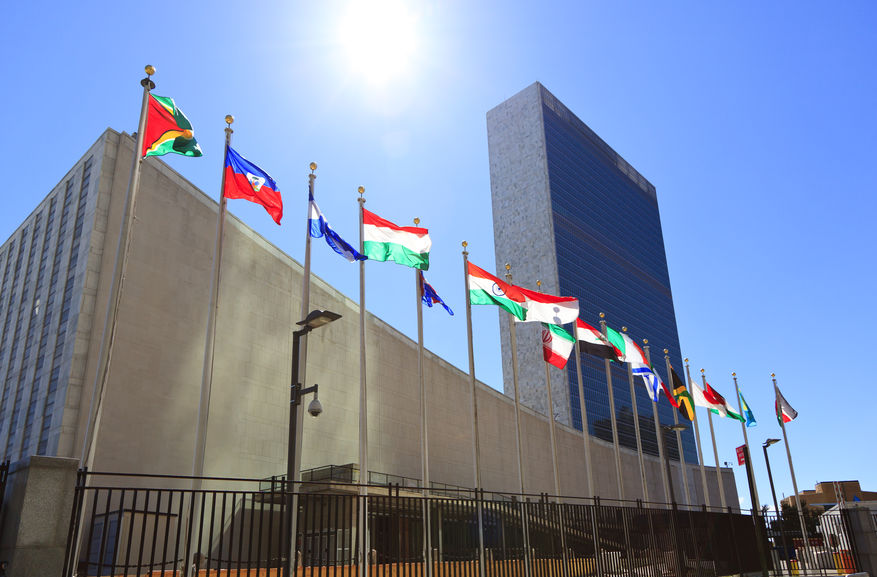 The United Nations´Headquarters with national flags in New York (iStock Photo)
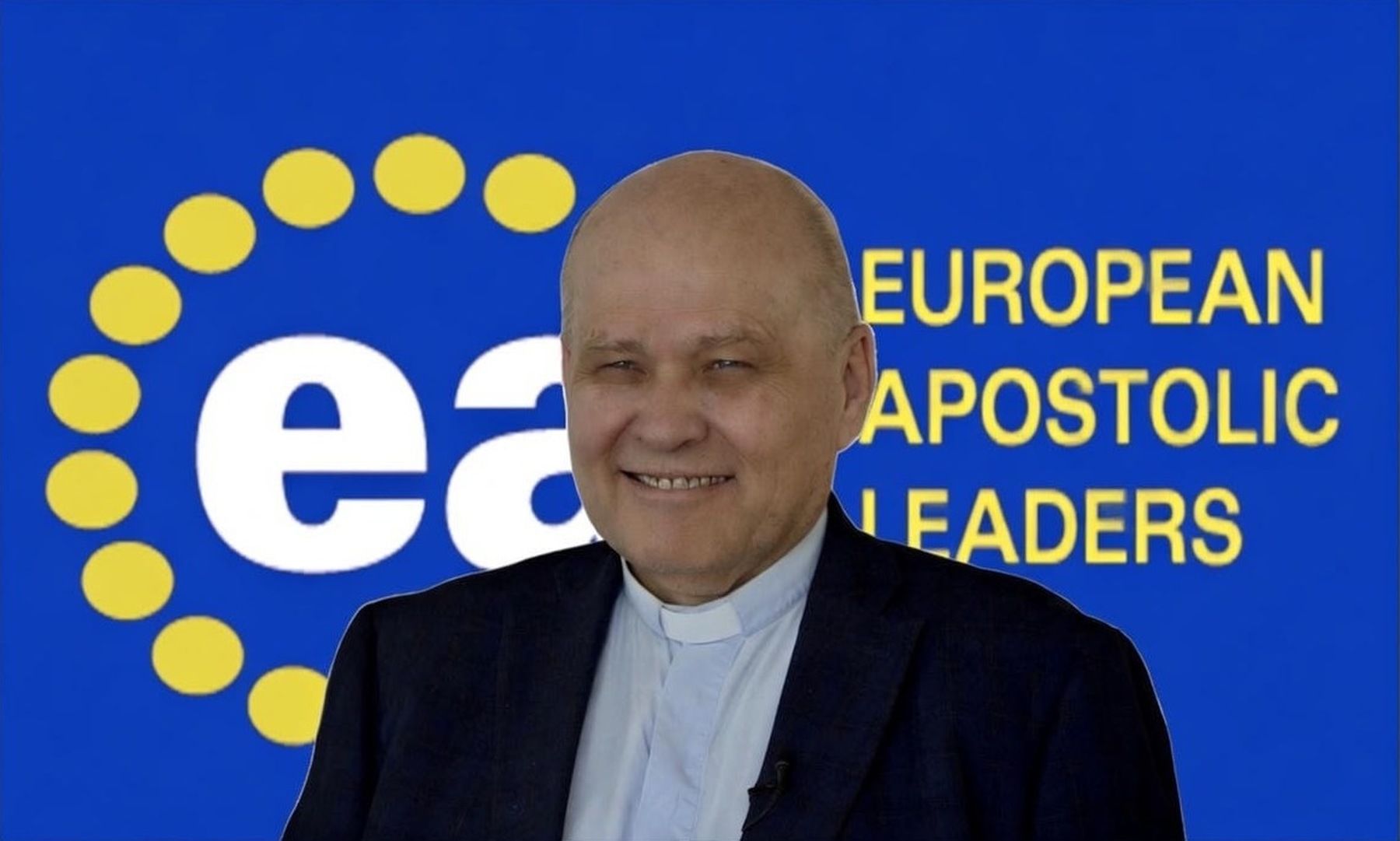
 Jan-Aage Torp is pastor of Oslokirken, chairman of Kristen Koalisjon Norge (Christian Coalition Norway) and president of European Apostolic Leaders. Follow him on X: @JanAageTorp (https://x.com/JanAageTorp)
In barely six weeks, António Guterres steps down, and still no one knows who will take over. I still believe there is hope for the UN. But it is time to take stock – soberly, and with prayer.
On October 13, I wrote in the Norwegian daily Dagen that "Now there is hope for the UN!", and I told the Norwegian newspaper Norge IDAG about the game being played behind the scenes. At the time, Greece held the presidency of the Security Council and wanted to speed up the process. Rebeca Grynspan of Costa Rica was in the lead, and in Brazil, Flávio Bolsonaro looked set to win the presidential election. I also spoke of two names being floated behind the scenes. One was the Bulgarian diplomat Nickolay Mladenov – Trump's man on the Board of Peace for Gaza, whom Netanyahu welcomed and who works closely with Tony Blair there. My sources in Washington said Trump would try to rally all five permanent members behind him. The other was Viktor Orbán, where the Trump camp had taken the initiative, but Orbán wanted guarantees before saying yes.
What has happened since?
On Friday, November 20, the Security Council held its ninth straw poll behind closed doors. Still no winner. The Council does not publish the results, but according to leaked figures reported by Reuters, The Guardian and PassBlue, among others, every single candidate received at least two red "discourage" votes from the five permanent members – the United States, China, Russia, the United Kingdom and France. A single such vote is enough to stop a candidate.
Grynspan is still in the lead, with ten votes in favor and four against, but two of the votes against her came from permanent members. Argentina's Rafael Grossi and the UAE's Lana Nusseibeh each had three permanent members against them. Both of the names I mentioned in October came out into the open. Mladenov was described as a possible compromise candidate, and on October 25 The Wall Street Journal reported that people in the Trump administration had floated Orbán as a candidate the United States, Russia and China could unite behind. But neither has been formally nominated. On October 22, Mladenov himself came out in support of Nusseibeh. Russia has said it will not nominate Orbán, and France and Poland have rejected him. In Brazil, Lula da Silva won the runoff on October 25. The Bolsonaro camp has disputed the result.
So the hope has not yet been fulfilled. But neither has it been extinguished.
A UN Built on Sound Values
Why does this matter so much to a Norwegian pastor? Because the UN was originally built on strong and sound values. The organization was created by the Allies who had defeated Hitler and Nazism. They were the ones who laid the foundations for a world order based on respect for borders and for agreements entered into. I have followed the UN closely since the Population Conference in Cairo in 1994 and the Women's Conference in Beijing in 1995, and I was myself a delegate in Nairobi in 2019. I have seen how much is at stake when the world body defines values.
The promise of a national home for the Jewish people lies deep in the UN's heritage. At the San Remo Conference in April 1920, the Balfour Declaration was written into the Mandate for Palestine, and the League of Nations confirmed it. When the UN was founded in 1945, the rights from the Mandate era were carried forward through Article 80 of the UN Charter. This has been brilliantly illuminated in Norge IDAG journalist Ingvill Mydland's recent articles from San Remo.
And one of the UN's first major decisions was the Partition Plan of November 29, 1947, which laid the groundwork for a Jewish state. Thirty-three countries voted in favor – Norway among them. President Harry S. Truman put his full weight behind the resolution, and when Israel declared its independence on May 14, 1948, Truman recognized the new state just eleven minutes later. On May 11, 1949, Israel was admitted as a member of the UN.
Many Christians may ask: Why should we get involved in the UN? The answer is that Christians were involved from the very beginning. In 1947, the Pentecostal preacher and editor Rein Seehuus received a call to travel to New York to plead Israel's cause. With a press card from his magazine Profetrøsten ("The Prophetic Voice"), he gained access to the UN building, and for about two years he spoke with delegates about the Bible's promises of the Jewish people's return to their land. He developed a close relationship with Israel's UN envoy Abba Eban and held conversations with Secretary-General Trygve Lie. I know the family and have studied the papers he left behind in depth. It is well attested that the conversations with Seehuus had a real impact – including on the position Norway took.
From Midwife to Pillory
As early as 1948, this heritage came under heavy attack, not least from the Arab and Muslim world. The low point came on November 10, 1975, when the General Assembly, by 72 votes to 35, adopted Resolution 3379, which branded Zionism as "a form of racism." Israel's UN ambassador Chaim Herzog – later the country's president and father of today's President Isaac Herzog – took the podium, reminded the Assembly that the vote fell on the anniversary of Kristallnacht, and tore the resolution in two. Only in 1991 was it revoked.
The bias has become entrenched. According to the Geneva-based organization UN Watch, the General Assembly last year adopted 15 resolutions against Israel – and only eleven against the rest of the world combined. From 2015 to 2024, the figures were 173 against Israel and 80 against all other countries. In the UN Human Rights Council, Israel is the only country with its own permanent item on the agenda. This is completely out of proportion and contrary to everything the UN was meant to stand for.
Politics is intruding into the judicial system as well. The International Court of Justice (ICJ) in The Hague is the UN's own court, but its judges are elected by the General Assembly and the Security Council – through political processes. So it is not always the law that decides.
The Candidates
Grynspan, who is Jewish and the daughter of Polish refugees, is moderate in her statements. I still believe she could have been a good choice, but some of the great powers are clearly unwilling to back her. As head of the International Atomic Energy Agency, Grossi has done formidable work to hold Iran accountable, and he has support in Washington. Argentine media, however, speculate that one of the votes against him came from the United Kingdom, after President Javier Milei once again laid claim to the Falkland Islands this fall. Nusseibeh faces opposition from several permanent members.
By unwritten tradition, it is Latin America's turn. The US Ambassador to the UN, Mike Waltz, says the United States would welcome a Latin American, but that what matters most is "the best candidate."
The Window Is Still Open
Donald Trump has more than two years left in the White House and a motivated UN ambassador. Several Latin American countries stand firmly with Israel. In Spain, which has long been among Europe's most Israel-critical countries, voters go to the polls on November 29, and a change of government could bring a new course. Within the EU, Greece, Cyprus, Austria and Czechia stand out as friends of Israel, and Slovenia has turned around this year. I believe more will follow.
December Will Be Decisive
Latvia holds the presidency of the Security Council in November. It is hardly Russia's favorite, and several observers have speculated that Moscow will not give Riga the credit for a breakthrough. In December, Liberia takes over, and then something has to happen. On paper, the process is simple: a candidate must win at least nine of the fifteen votes in the Security Council, with no veto from any of the five permanent members. The General Assembly then appoints the new Secretary-General, and throughout the UN's history it has always followed the Security Council's recommendation.
On Thursday, November 19, Xi Jinping, Vladimir Putin and Donald Trump met in Shenzhen and adopted a joint declaration in which, among other things, they pledged to work for reform of the UN. Whether they also agreed on a name, we do not know. I would not rule out that we will see signals early in December – and that the winner will be neither a woman nor a Latin American, but a man from a country all three great powers can accept.
Whoever it turns out to be: a strong Secretary-General who thinks in terms of principle and holds fast to the UN Charter can steer the organization in an entirely new direction.
Pray, and Speak Where Others Are Silent
This is where the great challenge lies for us as Christians. Among the readers of this article, many believe in the power of prayer. Paul urges us to pray "for kings and all who are in authority, that we may lead a quiet and peaceable life" (1 Timothy 2:2). Let us be like Rein Seehuus: rise up and speak where others are silent. Let us pray without ceasing – not for narrow, short-term solutions, but for divine solutions that can give the world a season of peace and goodwill.
What can you do? Pray specifically for the Security Council process in the coming weeks. And write to the Norwegian Ministry of Foreign Affairs – or your own government – and ask them to support a Secretary-General who is faithful to the UN Charter and treats Israel fairly.
I believe the Bible gives us reason to believe that we can pray good times into being. We know how the story ends, but not everything has to happen at once. Good times can prepare the ground for the gospel and for God's righteous order, and hold back the darkness we know will come in the end times.
So let us take this seriously, dear friends. Let us stand together for the Kingdom of God, for Israel and for our own country. We can never hand over responsibility for Norway to the UN, the United States, China, Russia or the EU. It is ours. Let us take it up – and stand strong with Israel and for Norway in this hour.
This commentary was first published in the Norwegian newspaper Norge IDAG.
